
WHEN NEW BUILDS GO BAD
Looking back to an experience from 2017

Like all reputable property investment advisors, I’m sick and tired of unscrupulous operators fleecing money from decent people looking to build a real estate portfolio.
Property as an investment vehicle has numerous advantages. Still, when an industry involves transactions worth hundreds of thousands of dollars, it can, unfortunately, attract the worst type of sharks seeking quick profits.
This is why I’m on the national board of the Property Industry Professionals of Australia (PIPA). We’re an industry group keen on bringing regulation to our industry to wave ‘good riddance’ to despicable practices.
My investment specialty is in the new-build space – a sector with so much wealth-building potential. Sadly, it’s also a property type that cops more than its fair share of bad reviews – and many of the problems stem from unsuspecting buyers being hoodwinked by unqualified spruikers selling lousy investment options at inflated prices.
However, sunlight is the best disinfectant. In an effort to help educate investors on what to look for in a transaction, I’m shining a light on how things can go wrong via a real-life example.
A friend in need
There are times when your professional and personal lives crossover, and you can help bring a happy result to a potentially dire situation.
A friend of mine wanted to grow her property portfolio and, after attending a seminar, found herself signed up to buy an off-the-plan, three-bedroom townhouse in a Melbourne suburb which, she was told, offered ‘excellent growth potential’.
She was pretty happy with her purchase, but knowing that new-build investment was my area of speciality, she asked me to look over the deal.
It looked like a typical proposition on the surface, but once I started digging a bit deeper, the cracks began to show.
Firstly, the construction itself didn’t fill me with confidence. It was a cookie-cutter design – identical to multiple other townhouses within the complex, all of which were being made available to tenants. Not only did it mirror those within her development, but there were plenty of other developments in the area set to suck up all the tenant demand with similar accommodation options.
In addition, ‘three-bedrooms’ was a loose description. With the third bedroom measuring closer to 2.5 metres x 2.5 metres, it was little more than a glorified study.
The finish was also dubious… in fact, it was a ‘house of straw’. This project definitely wasn’t under the watchful eye of a local builder with an excellent reputation for high-spec finishes. The development was being handled by an inexperienced small development company that was obviously minimising the specification to boost the margin.
Tell-tale signs included items such as 75-millimetre cladding, poor quality appliances, unfriendly room layout, no window furnishing, lack of security screen and bottom-of-the-range tiles and carpets. It was the sort of fixtures and fittings list that would never stand up to the rigours of a tenancy. Repairs and maintenance were sure to kick in soon after completion and be an ongoing headache for the owner.
Next up was the position. While private street access to a townhouse is excellent, having frontage to a very busy road makes for a dodgy proposition. You’d be risking an accident every time you tried to leave your driveway, and safety for a family with small kids would be a real concern. Those sorts of downsides won’t appeal either to tenants or to another buyer a few years down the track when it comes time to exit from the holding.
To make matters worse, there was no double glazing. This, coupled with its poorly-insulated finish, would mean noise from passing vehicles would sound like a traffic jam in your lounge room.
Next were contract terms designed to screw over the buyer and protect the builder. For example, once the build had reached the ‘compliance’ stage, the buyer was obligated to settle – even if there was a dispute about completion! Forget a warranty on workmanship, or arguments about what is or isn’t finished; you were contracted to pay up as soon as the box on compliance was ticked.
Then there was the matter of pricing. I ran the comparables and can confidently say that, based on the specifications sheet and plans, the figure was estimated to be $80,000-$100,000 above market on both build cost and end value. I spotted where the extra money was going straight away – inflated commissions being paid to the marketing agent and the developer’s pockets.
Completion time would also have been an issue in hindsight. During signup, my friend was told the build would be finished by Christmas 2018 – but I drove past in October 2019 and it was still nowhere near completion.
A positive ending
This was, in short, one of the worst investment options I and my team have ever come across. Fortunately, by seeking our advice straight after contracting, we were able to apply the force of legislation and help my family friend extricate herself from the deal and get her deposit refunded.
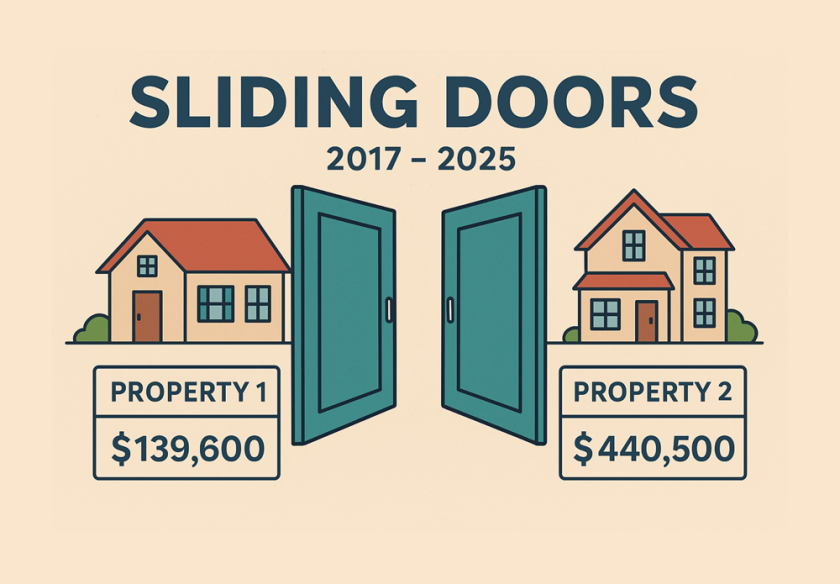
With that in hand, we assisted her in purchasing a three-bedroom, two-and-a-half-bathroom detached home on Queensland’s Sunshine Coast – one of the country’s strongest growth markets. Purchased for $449,500, the property was designed to suit the local demographic and built to a high standard. It was also delivering a 4.7% gross rental return, plus the tax and depreciation benefits of new construction.
The moral of the story is simple – tread carefully and seek advice from professionals who specialise in this type of investment.
There’s a bright future for those who rely on independent professional guidance during their investment decisions.
For further insights on property investment, avoiding common pitfalls and staying informed about market conditions. reach out to John Tsoulos or Frank Pennisi at IFP Advisory on (08) 8423 6176. Your investment success depends on making informed, strategic decisions.
IFP Advisory is an Accredited ASPIRE Property Advisor Network advisor and all professionals are Qualified Property Investment Advisors (QPIA). Property investing is about purchasing a property that aligns with your goals and investment strategy. You should never be sold an investment. Know your numbers! If you invest wisely and strategically, the Australian residential property market can be a rewarding venture.